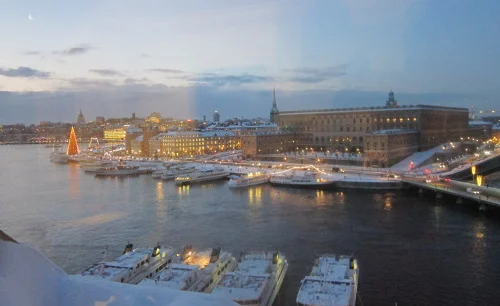
Arriving in Stockholm at night in early December, I was struck by the rows of lights in the windows of the lovely old buildings. It was Advent season, so most windows had sets of white candles – traditional symbols of hope in mid-winter. Gleaming snowy streets wound like trails through dark town. Stockholm is laced with canals whose inky edges were fringed with brightly lit white boats.
In September 2018 I made my first visit to Mount Wilson Observatory (MWO), perched on a craggy outcrop of the San Gabriel Mountains a mile above Pasadena, California. At the observatory between 1914 and 1919 my grandfather Harlow Shapley discovered the true shape of Milky Way galaxy and our place in it.
Harlow Shapley was very famous as a scientist. He located the center of the Milky Way galaxy, finding that our solar system is far from the Galactic Center. As Director from 1921 to 1953, Shapley built the Harvard College Observatory into the foremost US graduate school in astronomy and “a mecca” for astronomers from around the world. From 1953 Shapley published that life in the universe would arise on planets in “the liquid water belt” distance from their stars. This standard is applied in the search for extraterrestrial life today.
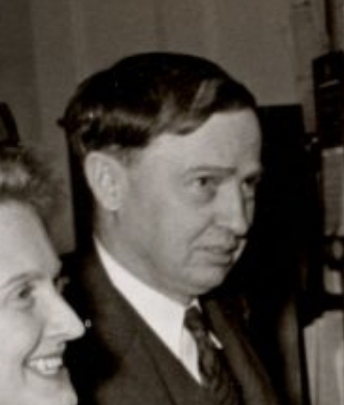
Lloyd Shapley received the Nobel prize from King Carl XVI Gustaf of Sweden at the annual grand ceremony in December 2012. Among the Nobelists my uncle Lloyd was the tallest. At age 89, he was the oldest. Though wobbly he was dignified and humorous.
Introduction: Why this Book Matters
“I would often look out my window on the top floor and see two or four at play with the rubber ring on the deck tennis court next to the woods. Bart Bok, Fred Whipple, Subrahmanyan Chandrasekhar, Martin Schwartzschild, to name only a few, tried their skill at this game.”
HARLOW SHAPLEY PROJECT GOALS:
To raise knowledge of Shapley’s legacy among general audiences and scholars. To insert Shapley’s achievments and messages in popular, scientific and historic narratives, both written and multimedia.
2-STEP SEARCH
1 - Enter your search term in pane below and click ENTER.
This takes you to excerpts from posts having your search term.
2 - Click on a post to be taken to it. Use Command F (Mac) or Control F (PC) to show Search box on upper right. It will show your term. Click ENTER to view your search term. Use arrows to find your term throughout.
TO EXIT SEARCH
Click BLOG at the top of the page to return to this main BLOG page.
HARLOW SHAPLEY ON SOCIAL
Connect on social media:
Latest Posts
I'm delighted to go to California for the AAS 248 meeting and also do needed archival research. In this update, I report on a new grant, an exciting new home for Harlow Shapley Project content, and previews of two forthcoming posts.
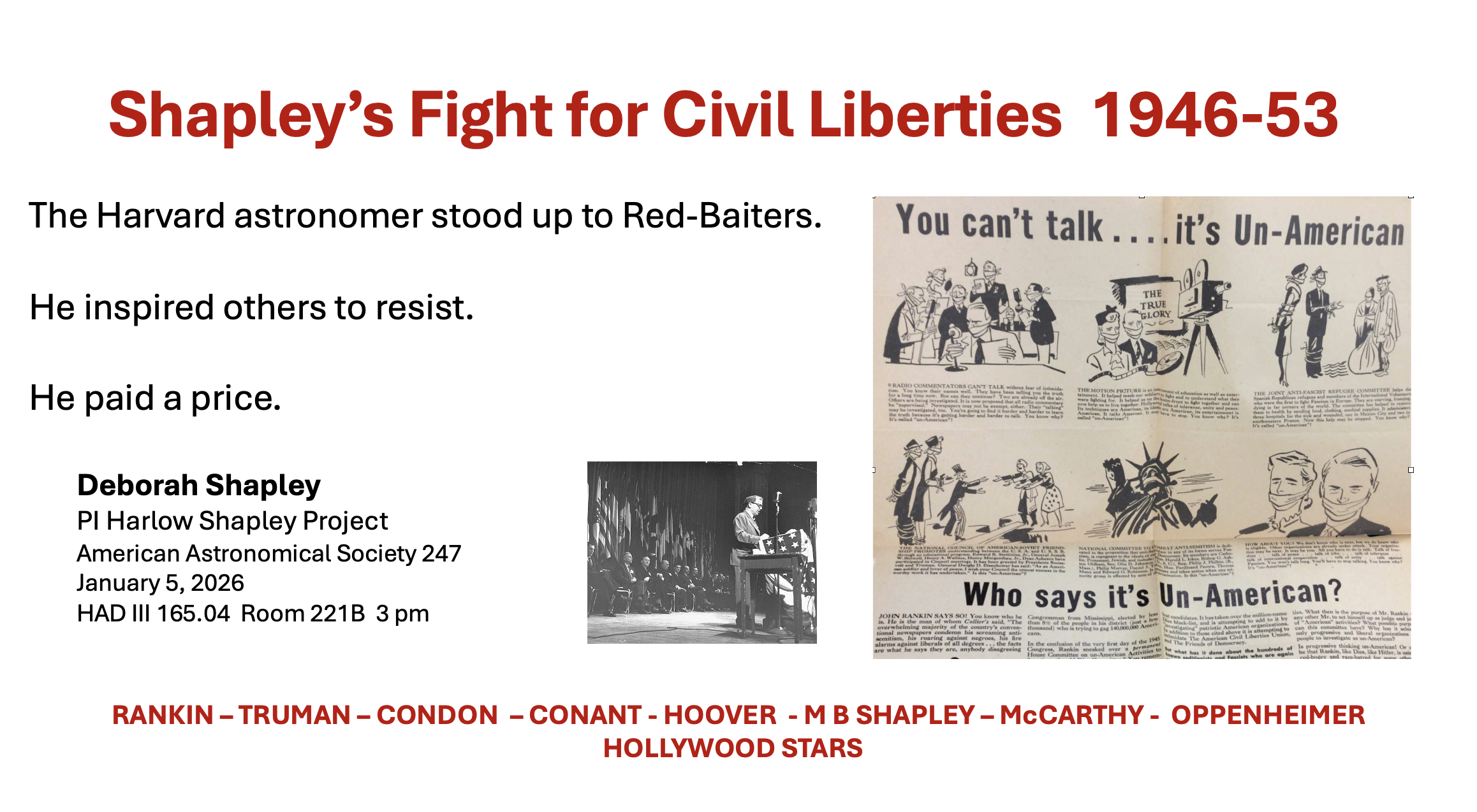
Here are selected slides from my presentation at the American Astronomical Society’s 247th meeting (#AAS247) on January 5, 2026. I told the story of Harlow Shapley’s public defiance when right-wing politicians tried to discredit scientists, artists, teachers, and other citizens through accusation without due process.
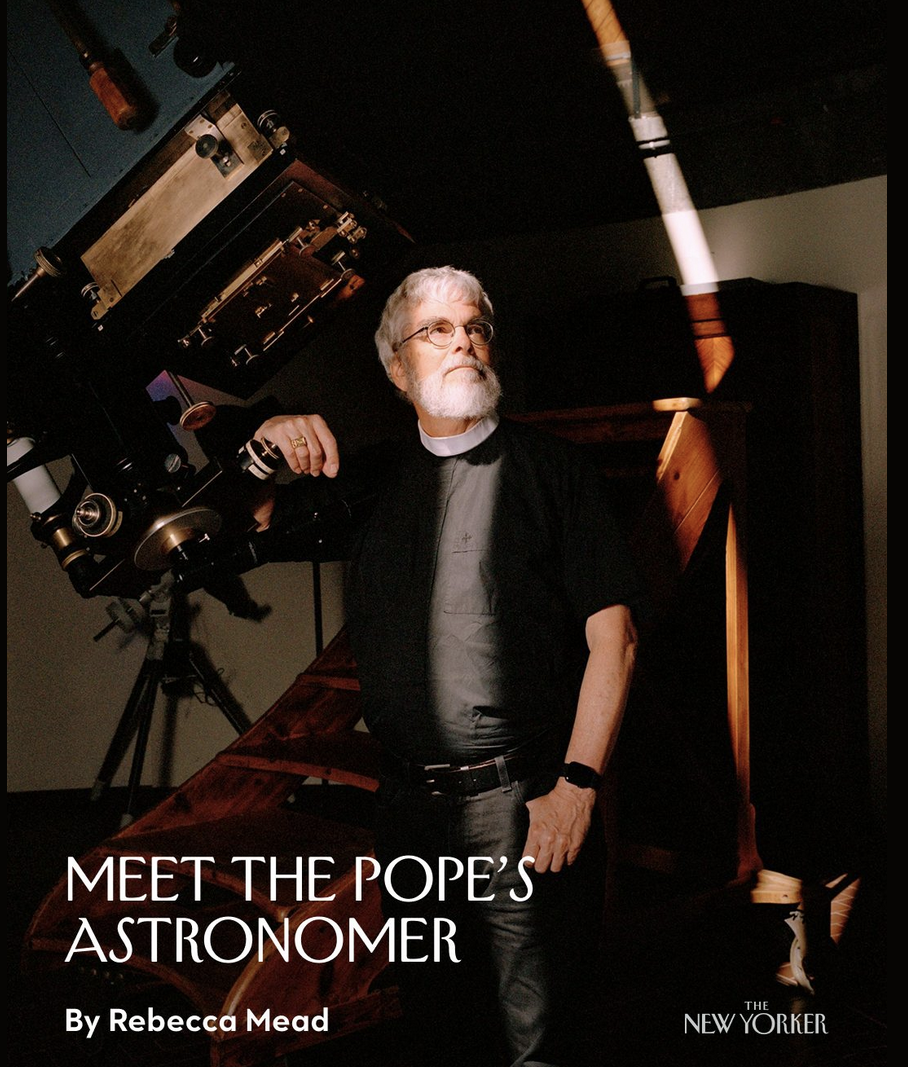
The New Yorker profiled Brother Guy Consolmagno, the “Pope’s Astronomer,” but left out a key part of the story: his early mentor was Mildred Shapley Matthews, daughter of Harlow Shapley. Their collaboration shaped his first scientific publications and tied his career to the Shapley family’s wider legacy in astronomy.
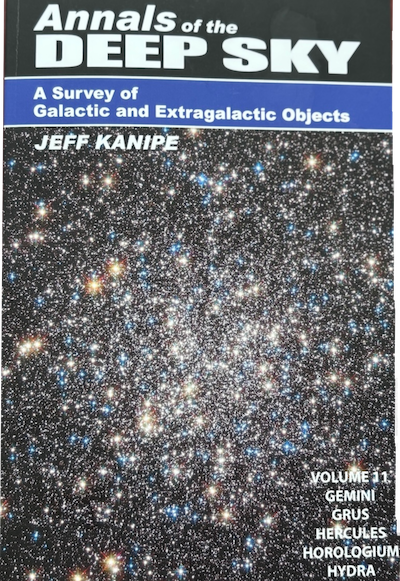
Today the 69 jewel-like globular clusters that Harlow Shapley mapped to discover the shape of our Galaxy still yield new science and delight.
The rise of modern Mexican astronomy was due to some remarkable Mexicans and a Turkish-Armenian who studied at the Harvard College Observatory in the late 1930s and early 1940s and the passion of HCO Director Harlow Shapley for astronomy as an international science.
From the Editor: 4 opportunities in the spring and summer advanced the Project’s goal “to raise knowledge of Shapley’s legacy among general audiences and scholars.”
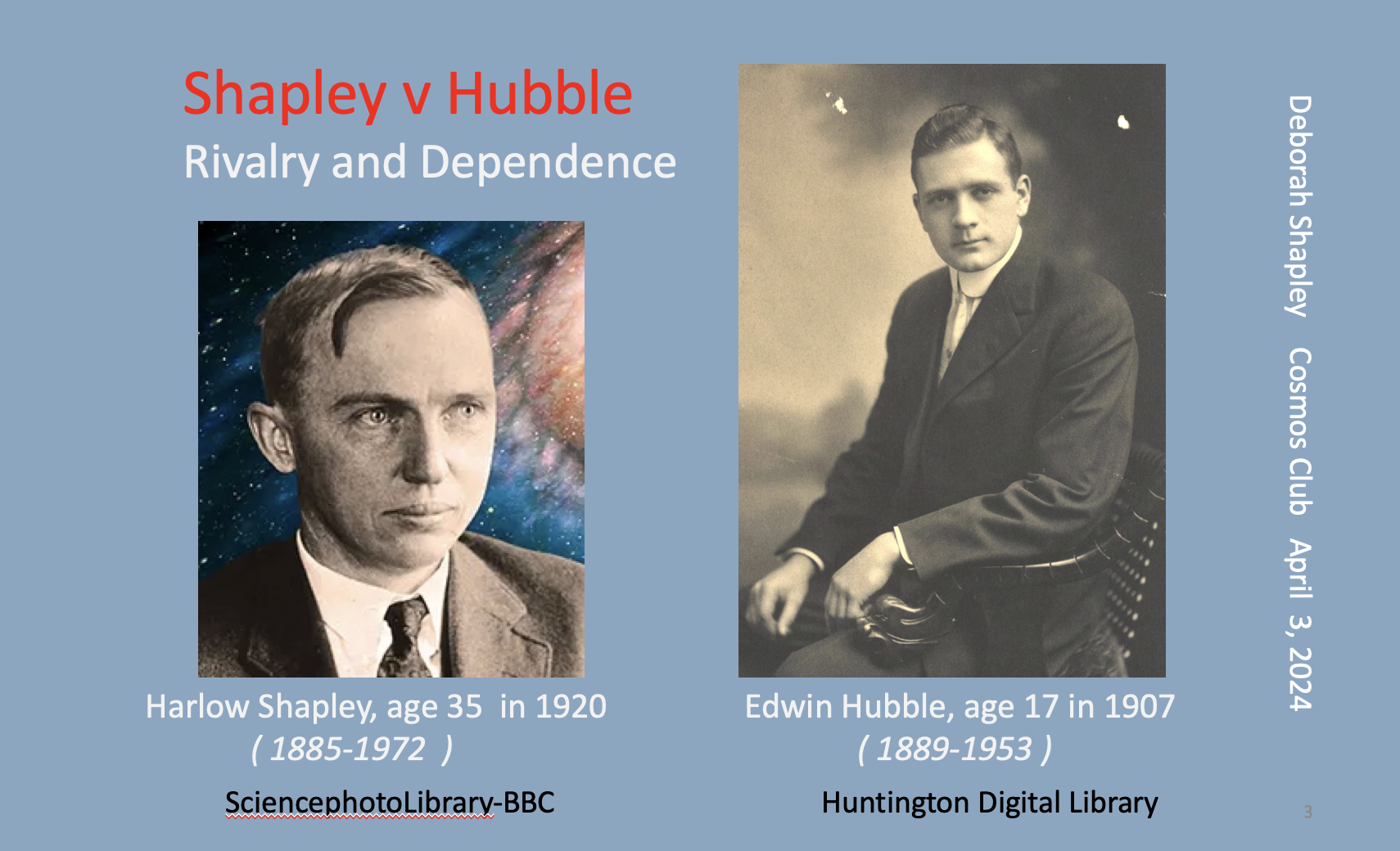
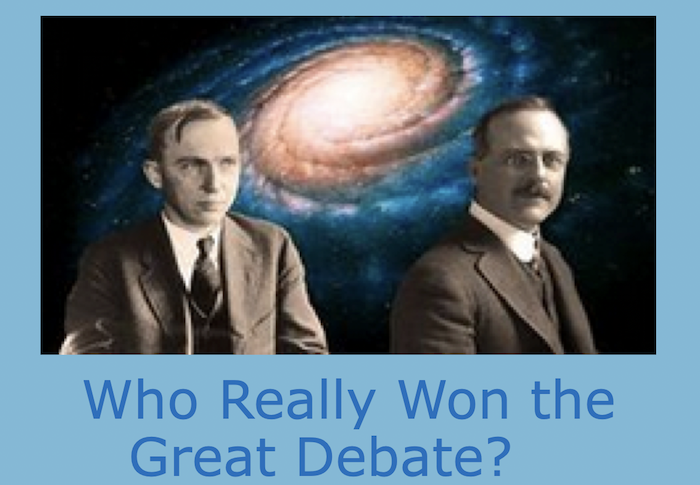
Drawing on one of the most famous debates in scientific history, Deborah Shapley poses the question whether head-to-head conflict is a model that benefits science. She offers a wider version of the story of her grandfather Harlow Shapley’s loss after 1920 debate with Heber Curtis, at which Shapley argued “island universes” were located inside our Milky Way Galaxy. But in the 1920s when Edwin Hubble sent him evidence these “nebulae” were way beyond our galaxy, Shapley pivoted to the view he had opposed. For decades afterward, Shapley pushed scientific work on galaxy distribution and spread public knowledge of this unfolding universe.